The Bennington Triangle: Five Vanished, and One Was Found on Ground They Had Already Searched
Between 1945 and 1950, five people vanished around Glastenbury Mountain in Vermont. Only one was ever found — on ground the search teams had already walked, again and again. Her red coat was never recovered.
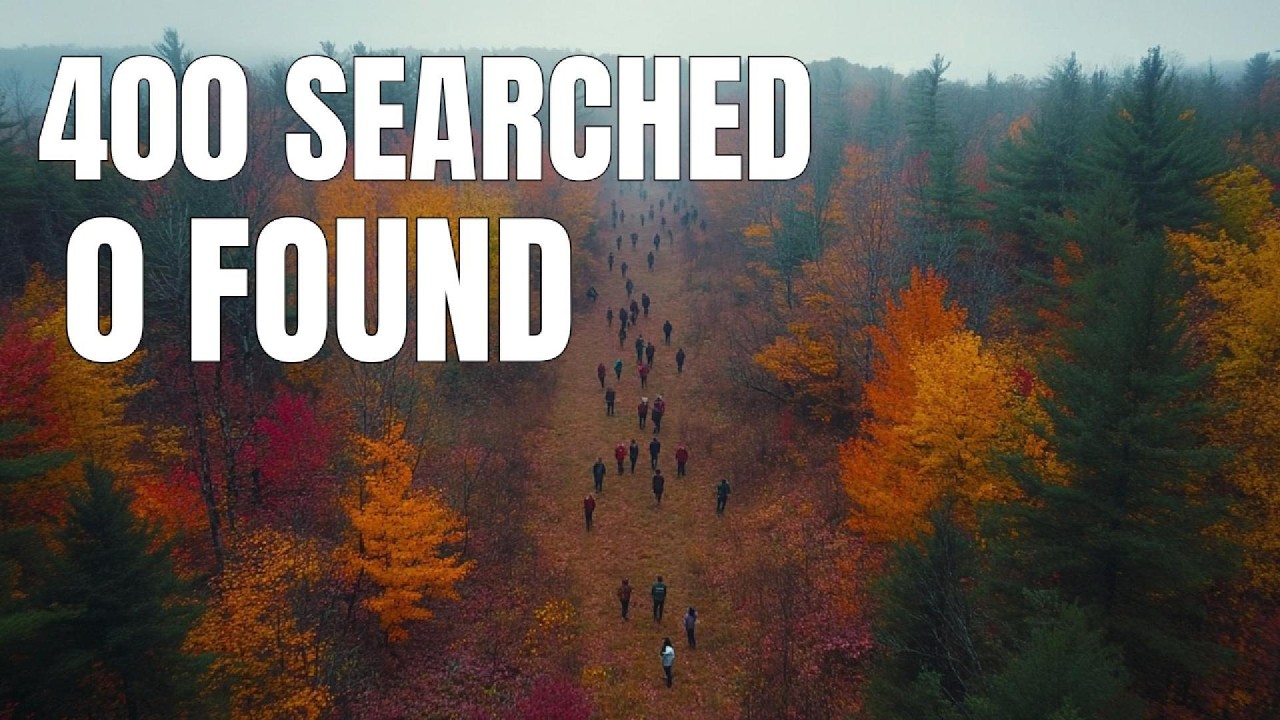
Between 1945 and 1950, five people vanished in the same corner of southern Vermont, around a mountain called Glastenbury. A hunting guide. A college student. A war veteran. An eight-year-old boy. And a fifty-three-year-old woman.
Four of them were never found. The fifth turned up seven months later — on ground the search parties had already crossed, over and over, without seeing her. No one could say what killed her. And the bright red coat one of the missing had been wearing was never recovered: not the coat, not a single thread of it.
A name that came later
It is worth saying up front: “The Bennington Triangle” is not an official name. There is no triangle drawn on any police map. The term was coined decades afterward by a Vermont writer, Joseph Citro, to group together a run of disappearances that shared a place and a stretch of years. It is a label, not an explanation.
But the disappearances are real. They are in the state police records, in the newspapers of the time, in the search files. Five people, over five years, walked into the same woods and did not walk back out. However invented the name is, that fact is not.
The first one
In November 1945, Middie Rivers was leading a group of four hunters back toward camp. He was seventy-four years old and knew those mountains better than any living person. He was out front. He got a little farther out front. And somewhere on the stretch of trail between one bend and the next, he was gone.
They searched for weeks. Hundreds of people combed the slope. The only thing anyone found was a single rifle cartridge in a stream, the caliber he used. Nothing else. No clothing, no trail, no body. The man who knew the woods best was the one it took first.
The red coat
A year later, on December 1, 1946, Paula Welden went for a walk. She was eighteen, a student at Bennington College, and she decided to hike a stretch of the Long Trail on a cold afternoon. She wore a bright red coat — the kind of color you can see for miles against snow and bare winter trees.
A gas station attendant saw her heading for the trail. A couple walking behind her saw the red coat ahead for a while. No scream. No struggle. Just a bend in the path and then nothing.
The search for Paula Welden was enormous, clumsy, and in the end useless. And it exposed something Vermont did not know it had: a problem.
The force a search built
In 1946, the state of Vermont had no state police. Order rested on a patchwork of county sheriffs, working separately, with no common command and no training for a search on that scale. People walked the same ground twice while other ground went untouched. Paula Welden’s father left the state, publicly furious, saying Vermont was simply incapable of mounting a real investigation into his daughter’s disappearance.
He was right, and the state admitted it. The following year, in 1947, the Vermont legislature created the Vermont State Police — a trained, coordinated force, a direct response to failing to find a girl in a red coat on a marked trail. Hold onto that detail. It comes back at the end of this story, and not in the way you would expect.
The bus
On December 1, 1949 — three years to the day after Paula Welden vanished — James Tedford was riding home. He was a veteran, a resident of the Soldiers’ Home in Bennington, traveling on an intercity bus back from visiting relatives. The people on board remembered him in his seat at the previous stop. His luggage was still on the rack. The timetable he had been reading was open on the seat.
And somewhere between one stop and the next, without the bus pulling over, without anyone seeing a door open, the seat was empty. Fourteen people rode that bus. Not one of them saw James Tedford leave.
The boy
In October 1950, Paul Jepson was eight years old. His parents were the caretakers of the town dump outside Bennington; one afternoon his mother left him sitting in the family truck while she went to feed the pigs. When she came back, the truck was empty.
Paul was wearing a red jacket. And here Vermont’s searches ran into the same impossible color again: hundreds of people combing a woods, looking for a spot of red against the gray and brown of autumn, and finding none. Tracking dogs followed his scent to a crossroads and, right there, lost it.
What the searches found
Sixteen days after Paul Jepson disappeared, on October 28, 1950, Frieda Langer went for a hike with her cousin near the Somerset Reservoir. She was fifty-three and knew the area. At one point she slipped crossing a stream and told her cousin she would head back to the cabin to change. She was in plain sight. The cabin was close. She never arrived.
The search for Frieda Langer was the largest of them all. Planes. Helicopters. Hundreds of people raking the woods week after week. They worked the ground around the reservoir until they knew every tree. And they found nothing.
Frieda Langer was the only one of the five who ever turned up again.
The open ground
On May 12, 1951 — seven months after she vanished — two fishermen found Frieda Langer’s body, lying in plain sight on an open bank near the reservoir. She was not hidden. She was not buried. She was on ground four hundred people had already walked, five times, the previous autumn — and none of them had seen her.
The body had been exposed too long. The medical examiner could not determine a cause of death. There was no wound to point to, no verdict to give. Just a woman, found in plain sight, on ground already searched, with no explanation for how she died or why no one had found her sooner.
And here the detail we held onto closes the loop. The force Vermont built after the failed search for Paula Welden — the trained, coordinated state police, made precisely so that no one would be lost in those woods again — was part of the teams that crossed and re-crossed the ground where Frieda Langer lay. And they did not see her. A force was built to find the missing, and that same force walked over the one person who was there to be found.
The thread that was missing
The other four never surfaced. Middie Rivers, Paula Welden, James Tedford, Paul Jepson: no bodies, no clothing, no graves. And of everything those mountains kept, there is one absence that is still hard to explain.
Paula Welden’s red coat — the most visible color there is, the one hundreds of people searched for over years among snow and bare trees — was never recovered. Not the whole coat, not a scrap, not a single red fiber anywhere on that slope.
Five people walked into the same woods over five years. One came back, on ground already searched, with no cause of death. The rest are still out there, or nowhere at all. And the easiest color in the world to see vanished with them, without leaving a thread.
Reconstructed from Vermont State Police records, contemporary press, and the 1945–1951 search files. “Bennington Triangle” is a name coined by author Joseph Citro, not an official designation. No images of the victims or the searches are reproduced; the visuals are atmospheric reconstructions created for the channel.
◆ Free Access ◆
Read the full dossier — free
Drop your email and unlock the complete case-file library as PDFs.
No spam. Just case files.
◆ Free Access ◆
Download every case file
Want the full dossier for this case — and every other one — as a PDF? Drop your email and unlock the complete library.
No spam. Just case files.