The Dark Castle: The Unsolved Triple Murder at the Castelinho of São Paulo
In 1937, three people were found dead inside a gothic mansion on Apa Street in São Paulo. Police closed the case in an hour. But the bullets could not have come from the guns found there. Someone had switched them.
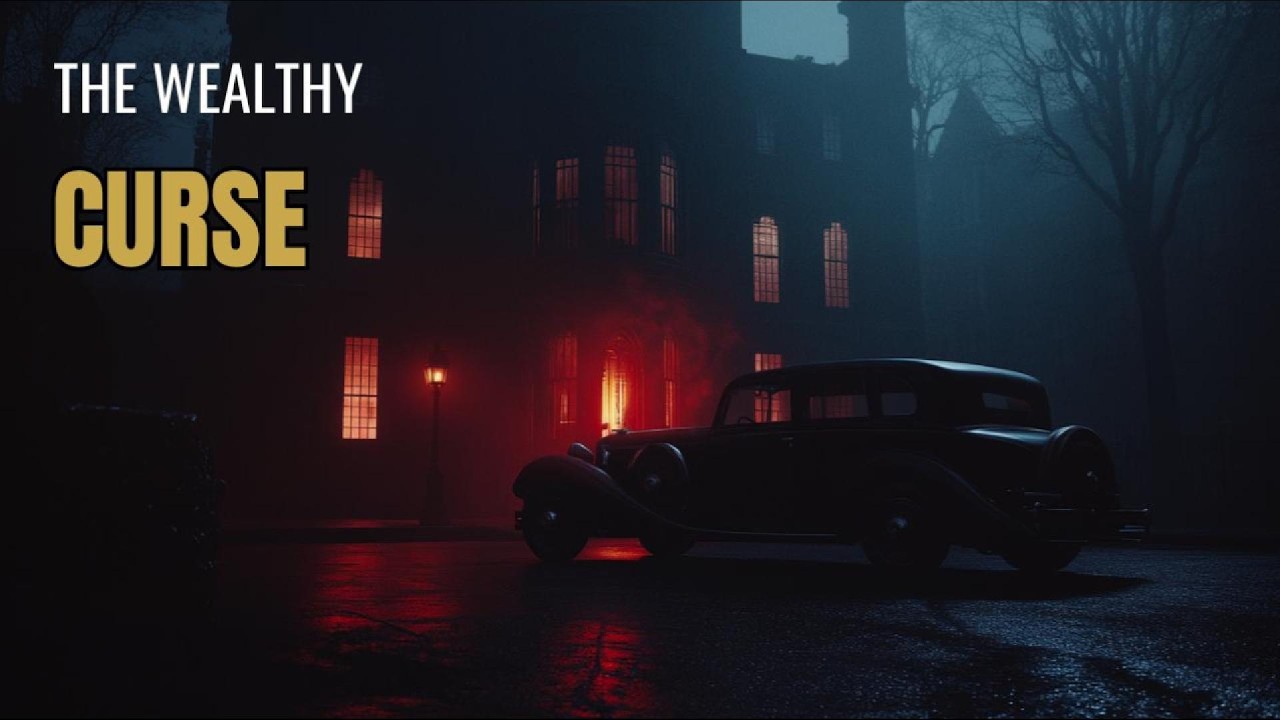
In 1937, in the heart of São Paulo, a gothic mansion sat in silence at the end of a long night. By the next morning, three people had died inside it. A mother. Two brothers.
The police arrived, photographed the scene, collected the weapons, wrote their report, and closed the file. There was only one problem: the bullets that killed those three people could not have come from the guns found inside that house. Someone had been there before the police. And no one ever discovered who.
The Castelinho of Apa Street
In 1937, São Paulo was reinventing itself at full speed. The old coffee economy had given way to factories and immigrants. The old elite watched from behind their iron gates, settled into the art nouveau palaces of Campos Elísios. And on Apa Street, something that did not belong there: stone towers, pointed arches carved into the façade, as if lifted from a village on the Rhine and set, without explanation, in the tropics.
A gothic castle — small, precise, and deeply out of place — in the center of a Brazilian city. The neighbors had always called it the Castelinho, the “little castle,” a nickname somewhere between affection and unease, as if the building were a riddle no one had wanted to solve. It had watched the street for decades. On one night in 1937, the Castelinho stopped watching and became the watched.
The family
The family that owned the Castelinho was exactly what the neighborhood suggested: old money, discretion, the kind of name that appeared in the society pages, never in the crime section. They had built their wealth over generations with the patience of those who know that visible fortunes attract the wrong attention. By the 1930s, Vargas-era Brazil was no longer the same, and the protections certain families depended on were being dismantled. The family withdrew. To the neighbors, they were simply a household of the old order living quietly. No one suspected that something irreversible was already in motion.
The scene
The exact date was never confirmed, and the press reported what happened in general terms. What the record does preserve: a neighbor heard gunshots before midnight. When the police arrived, the street was calm. The gate unlocked. The front door open. The gas lamps burning. No overturned furniture. No signs of a struggle.
The first body in the entrance hall — a son, face-up, as if he had simply stopped standing. The second at the foot of the stairs, his brother, the same stillness. The third at the end of the corridor, the mother, face-down, near the window. Window closed. Curtains drawn. Three people. Three bullet wounds. No forced entry. Nothing stolen. Two revolvers recovered. The detective formed his conclusion in under an hour. He was wrong.
The impossible shots
São Paulo in 1937 operated under a quiet understanding between institutions and certain kinds of families. But what an examiner found was not a complication: it was a contradiction. The wounds did not match the weapons — not in caliber, not in distance, but in the one variable the initial investigators apparently had not thought to calculate. The angle.
The shots were impossible. Not improbable. Not questioned. Impossible, in the strict and technical sense of the word. The reconstruction of the first victim established that the bullet’s entry angle required the weapon to have been fired from a point far above the victim’s head, with a steep downward tilt. For a standing person to produce that trajectory inside that room, they would have had to be positioned near the ceiling. The ceiling height made that position physically unoccupiable by any human being.
The second case reached the same conclusion by different evidence. The trajectory placed the barrel behind the victim and to his left. Yet the examination of both hands revealed no trace of gunpowder residue: he had not fired the weapon recovered beside him. And the architecture of the room left no space for a shooter to have occupied the required angle and then exited without leaving evidence of that passage.
The third finding was the hardest to explain. The woman near the window had the wound at the back of her head. The weapon attributed to her death was recovered from the floor directly in front of her body, across the room, some four meters away, in a direction directly opposite to where the bullet had entered. A bullet does not reverse its direction. Someone had placed that weapon there after she was already dead.
The switched weapons
The examiner’s conclusion was stated without reservation: the weapons recovered from the Castelinho of Apa Street were not the weapons that killed the three people found inside it. The real weapons had been removed from the scene. Replacement weapons had been left in their place. The substitution required access to the house, knowledge of its layout, and enough time after the killings to arrange the scene before the police arrived. And it had been done with precision.
The real weapons were never recovered. The person who carried out the substitution was never identified. The case was recorded as unsolved. It was not formally reopened.
Three explanations, none confirmed
Three explanations have circulated among investigators. The first: a hired professional, with prior access and a weapon substitution planned as part of the operation. The second: a fourth person present that night, someone known to the family, who was never called to testify. The third: that in 1937 Brazil, a case involving a prominent family was exactly the kind of case certain institutions preferred to see closed before it generated questions.
Which of these explanations accounts for what happened at the Castelinho, no record has confirmed. Which can be ruled out, none has either.
The building that survived
São Paulo has demolished and rebuilt itself around it more times than anyone has been able to count. The coffee barons’ palaces in Campos Elísios have been turned into offices, split into small apartments, or simply erased. The neighborhood holds almost no physical trace of what it was in 1937. But the Castelinho remains: the stone towers, the pointed arches, the tall windows facing the street with the patience of something that has decided to outlast every explanation offered about what happened inside it. In a city that tears down everything that no longer serves a clear purpose, this building has survived. Perhaps because its purpose was never quite resolved.
Three people entered that house. Three people died. The weapons that killed them were removed before the police arrived. And no one — in the days after, in the decades after, in the nearly ninety years since — has ever answered for it. The Castelinho watches the street. And it waits.
Reconstructed from the case records and the surviving ballistics examiner reports. Real case with victims who died; treated with respect. Theories are presented as disputed interpretations, not confirmed fact. Visuals are atmospheric reconstructions created for the channel.
◆ Free Access ◆
Read the full dossier — free
Drop your email and unlock the complete case-file library as PDFs.
No spam. Just case files.
◆ Free Access ◆
Download every case file
Want the full dossier for this case — and every other one — as a PDF? Drop your email and unlock the complete library.
No spam. Just case files.