The Pianist Trail: The Disappearance of Kris and Lisanne in Panama
Two Dutch friends set out on an easy three-hour hike in Boquete, Panama, and vanished. Ten weeks later, a backpack surfaced with 90 photos taken in the dead of night. What the file actually shows.
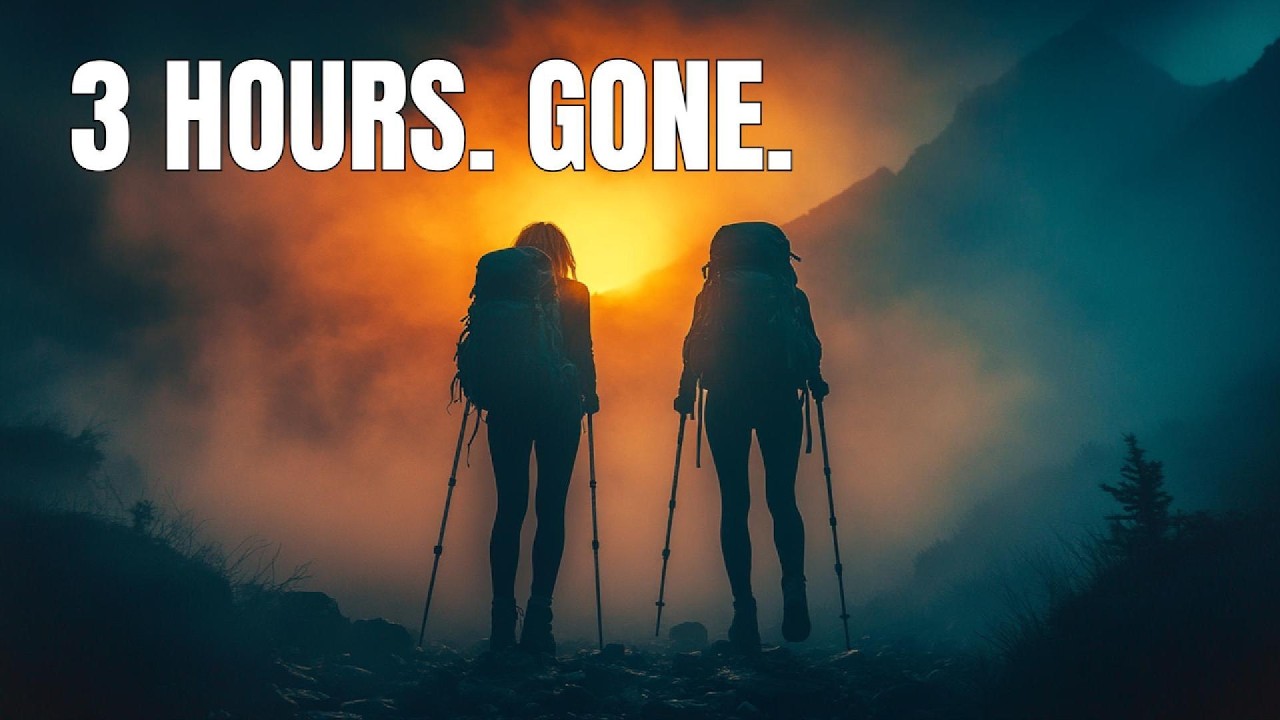
It was supposed to take three hours. A daylight hike, on a trail so popular that tourists do it before lunch and are back for dinner. Two friends went up. They waved goodbye at eleven in the morning. They were never seen alive again.
For ten weeks, the jungle gave back nothing. No bodies, no clothing, no trace. And then a backpack turned up beside a river, far — very far — from where they should have been. Inside: their phones, their camera, and ninety photographs taken in total darkness, in the middle of the night, that no one has ever explained.
Two Dutch friends in Panama
Their names were Kris and Lisanne. Two students from the Netherlands, best friends. Kris was twenty-one, drawn to art and photography. Lisanne was twenty-two — an athlete, calm and careful, who wanted to work with children.
In March 2014 they flew to Panama together. The plan was simple, and good: six weeks to learn Spanish, volunteer at a local school, and see a piece of the world before real life began. They settled in Boquete, a small mountain town, cool air, green hills, the kind of place travelers call paradise. Classes hadn’t started yet. They had a few free days. And on the first of April, they decided to spend one of them on an easy, well-known trail just outside town. They took the family dog with them. They told no one to worry. There was no reason to.
The El Pianista trail
The trail is called El Pianista — the Piano. It climbs through cloud forest to a ridge with a view of the valley, roughly three and a half hours round trip for an average walker. That afternoon, their camera took ordinary photos: two friends smiling, green hills, sunlight. A normal, happy hike. The last daytime photo was taken early in the afternoon, at the top, past the ridge — on the far side, where the marked trail begins to fade into wild jungle.
And then, the same day — at thirteen minutes past four in the afternoon — one of their phones tried to call emergency services. Minutes later, the second phone tried too. Something had gone wrong. Somewhere past that ridge, on a trail thousands walk safely, the simplest day hike of their lives turned into something neither of them would walk out of. The dog came back alone.
Ten days of searching, and nothing
That night they didn’t come home. The next morning they missed an appointment with a local guide. Concern became fear, and fear became a search. By 6 April their parents had flown from the Netherlands, bringing Dutch detectives and dog teams to join the local police.
They combed the forest for ten days. Helicopters, volunteers, search dogs working the ridge and the ravines below it. In 2014, the technology simply couldn’t see through that canopy: the rainforest was too thick, the terrain too steep, the rivers too many. They found nothing. Not a footprint. Not a scrap of fabric. Two young women had walked into a forest thirty minutes from town and vanished as completely as if the trail had closed behind them.
The backpack by the river
Ten weeks passed. The search had wound down. And then, in June, a woman from a remote village called Alto Romero turned in a blue backpack. She said she had found it by a riverbank. The village sat far from the trail — hours of hard walking through jungle, on the far side of the mountains from where the women had started.
Inside, everything was strangely intact. Two pairs of sunglasses. Cash — untouched. A water bottle. Lisanne’s camera. And both of their phones. Nothing stolen. Nothing destroyed. The money still there. Whatever happened to Kris and Lisanne, robbery was not the motive — because the most valuable things they carried came back, dry and in order, in a bag by a river that no lost hiker should ever have reached. The phones and the camera would now tell the rest of the story. Most of it. Not all.
The phones: seventy-seven calls
The phones held a record of ten desperate days. It began the very afternoon of the hike — those first emergency calls on 1 April. Over the days that followed, the phones were switched on again and again, searching for a signal the jungle would not give. In total, seventy-seven attempts to reach help — to the emergency number in Panama, and to the emergency number back home in the Netherlands. Out of all of them, only one call ever connected. And it lasted seconds before it died.
Then the patterns turn strange. One phone’s battery ran down and went silent after 4 April. But the other — Kris’s iPhone — kept being switched on for days. And on several of those days, someone tried to unlock it, and entered the wrong code. A phone that had been opened a thousand times before, now failing its own PIN. On 11 April it was turned on one last time, late in the morning, and then switched off forever. After that, only silence.
The ninety photographs in the dark
But it is the camera no one can forget. For a week after they disappeared, it sat unused. And then, on the night of 8 April — seven days after the hike began — it was switched on in the dark. Over roughly three hours, between seven and ten at night, it took around ninety photographs. Almost all of them in near-total blackness.
The flash lighting up fragments of a world: wet rock, a branch, plastic bags placed on a stone, what looks like a backpack, running water somewhere close. And in one frame, the back of a human head, hair matted, lit by the flash in the dark. Ninety photos, in the deep of the jungle night, taken with care, one after another.
Why? The theories fill the silence. Were they using the flash to light a path? To signal for a rescue no one was flying? To map a place they were trapped in? Or was there someone — something — else behind that lens? The camera recorded what happened. It never recorded why.
Two versions, no answer
Two months after the backpack, the remains began to appear, scattered for kilometers along the river. A boot, with a foot still inside. A pelvis. In the end, only a fraction of each woman was ever recovered. Some of Lisanne’s bones were found bleached, as if exposed far longer than the others. DNA confirmed the truth no family wants.
And here the story splits in two, and refuses to choose. The official conclusion: an accident. They lost the trail past the ridge, fell in that broken country, and the river carried the rest. A forensic lead for one of the families came to believe the same. But others never accepted it. They point to the untouched cash, the folded shorts placed high on a rock, the backpack that traveled impossibly far, the wrong PIN entered again and again.
Two explanations. Both with holes. Neither with proof. The official file is closed. The case, in every way that matters, is still open. An easy trail. A three-hour hike. Two friends who waved goodbye at eleven in the morning. Thousands still walk the El Pianista: they reach the ridge, take their photos, and are back before dark. Kris and Lisanne reached that ridge too. What happened on the far side, the jungle has never said. And it’s still there — green, and silent.
Reconstructed from the official Panamanian investigation file, the forensic analysis of the devices, and the DNA reports. No images of the women or of the recovery are reproduced; visuals are atmospheric reconstructions created for the channel.
◆ Free Access ◆
Read the full dossier — free
Drop your email and unlock the complete case-file library as PDFs.
No spam. Just case files.
◆ Free Access ◆
Download every case file
Want the full dossier for this case — and every other one — as a PDF? Drop your email and unlock the complete library.
No spam. Just case files.